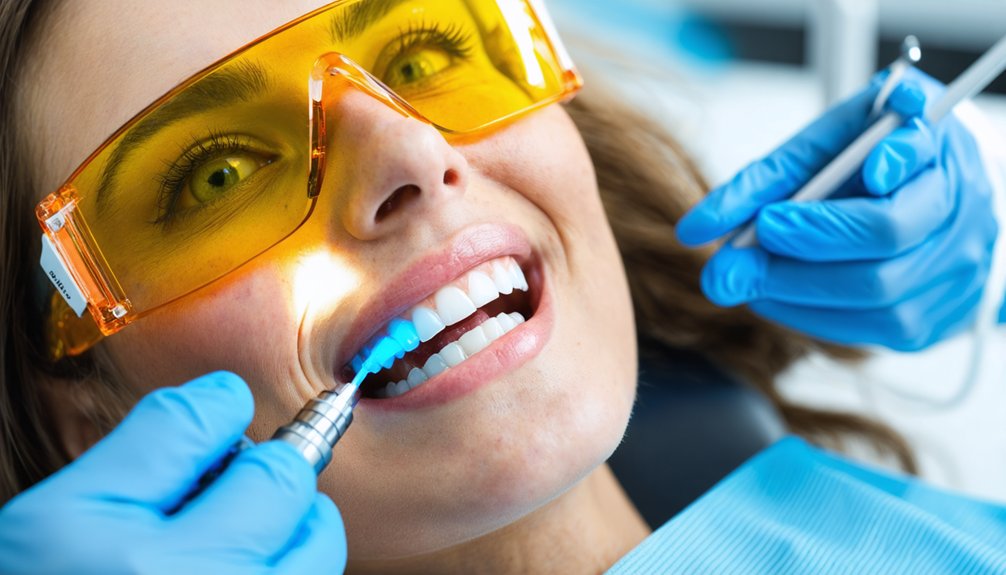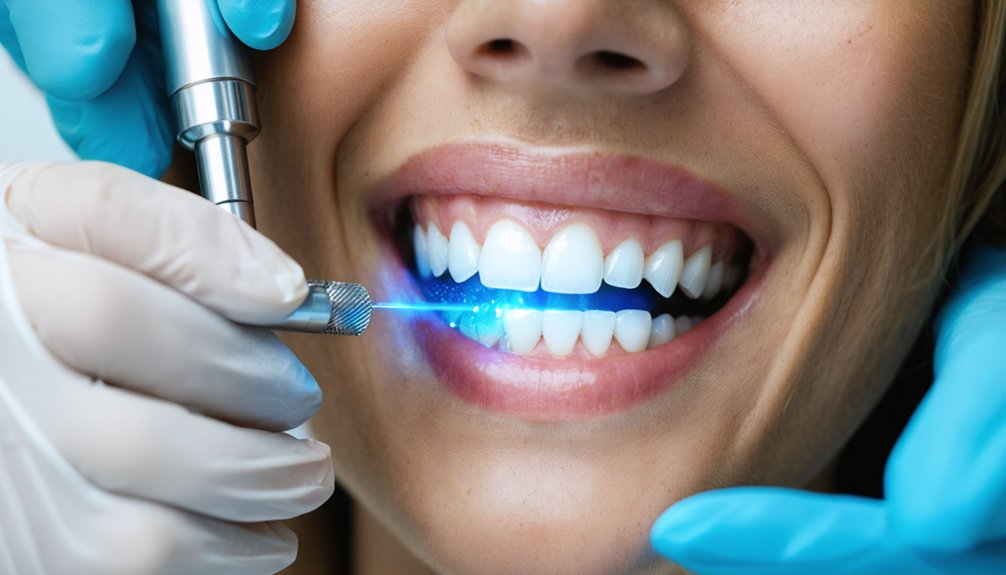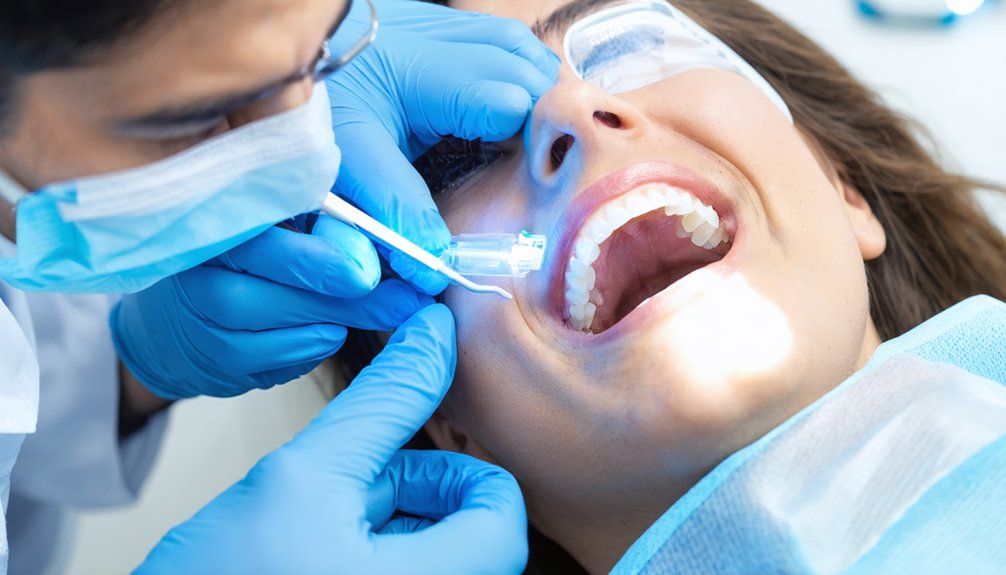
You’ll find laser teeth whitening costs between $400-$1,500, with most sessions running $500-$1,000 depending on your location. While insurance rarely covers this cosmetic treatment, you can save considerably through dental membership plans offering 20-30% discounts, shopping multiple providers for price variations up to $500, and timing treatments during promotional periods. Results last 6 months to 2 years, making strategic planning essential. Explore the complete breakdown below to maximize your investment and achieve your brightest smile.
Key Takeaways
- Laser teeth whitening costs $400-$1,500 nationally, with sessions typically ranging from $500-$1,000 depending on your location and dentist.
- Join dental membership plans to save 20-30% on treatment costs, reducing your out-of-pocket expenses significantly.
- Compare prices among multiple providers to find potential savings of $200-$500 in your area.
- Annual whitening subscriptions ($199-$349/year) offer discounted visits and better value than single sessions.
- Watch for promotional periods and package deals from local providers to secure lower rates on treatments.
Understanding Laser Teeth Whitening Costs and Price Ranges
While laser teeth whitening promises dramatic results, you’ll find that costs vary significantly across the country. National averages hover around $792, though you’ll encounter ranges from $400 to $1,500 depending on your location and provider choice. Metropolitan areas command premium pricing, while your dentist’s expertise directly impacts session fees.
You’re looking at $500 to $1,000 per typical session, with providers like Aspen Dental offering treatments from $359. Before committing, investigate hidden costs—severe staining may require multiple sessions, increasing your total investment. The technology brand and bleaching agent strength also affect pricing.
Since insurance won’t cover this cosmetic procedure, explore payment options upfront. Most treatments deliver complete results in one 60-90 minute visit, giving you immediate control over your smile transformation timeline.
How Laser Whitening Compares to Other Professional Methods
When you’re evaluating professional whitening options, laser treatment stands out for its unmatched speed—delivering complete results in a single 15-60 minute session compared to traditional trays that demand daily 30-60 minute applications over two weeks. You’ll achieve measurably superior results, with laser showing 1.88 times more color change than power bleaching methods.
The precision you gain allows targeted treatment of specific stains, while Zoom whitens all teeth simultaneously. Regarding patient suitability, laser works best for most candidates, though you’ll want professional supervision to manage the higher peroxide concentration (35-44%). Treatment side effects include potential short-term sensitivity, but laser actually provides better sensitivity protection than Zoom.
You control outcome intensity through adjustable settings matched to your dental anatomy, minimizing uneven whitening risks inherent in traditional approaches.
Expected Results and How Long They Last
After choosing your professional whitening method, you’ll want to understand what brightness gains you can expect and how long you’ll keep your new smile. You’ll see dramatic improvement within one 90-minute session—up to 20 shades lighter—with results visible immediately after treatment.
Your results typically last six months to two years, though customized whitening methods combined with excellent habits can extend this to three or four years. Factors influencing longevity include:
- Your consumption of staining beverages like coffee, tea, and red wine
- Daily oral hygiene practices and professional cleanings
- Touch-up treatments every six to twelve months
You control the duration through maintenance. Brush twice daily with whitening toothpaste, floss consistently, and avoid staining foods post-treatment to maximize your investment.
Insurance Coverage and What You’ll Pay Out-of-Pocket
You’ll need to budget for laser teeth whitening yourself since most dental insurance plans classify it as cosmetic and won’t cover the procedure. Expect to pay $500-$1,000 per session out-of-pocket, though you might find relief through the rare insurance plan offering 20-50% coverage or discount dental programs that reduce costs.
Understanding your payment options upfront lets you plan for the brilliant, camera-ready smile you’re investing in without financial surprises.
Why Insurance Won’t Cover
Most dental insurance plans classify laser teeth whitening as a cosmetic procedure, which means it’s excluded from standard coverage. Understanding dental insurance reimbursement policies helps you set realistic expectations for out-of-pocket costs.
Your insurance focuses on treatments that maintain or restore oral health—like fillings and root canals—rather than procedures that enhance appearance. Here’s why coverage is typically denied:
- Cosmetic classification: Whitening improves aesthetics without treating medical conditions
- Limited exceptions: Only rare cases involving trauma or medication-related discoloration have potential for qualifying for medical necessity
- Documentation requirements: You’ll need substantial proof of non-cosmetic need, which most whitening cases can’t provide
Even premium plans rarely offer full coverage. When they do, expect annual maximums, waiting periods, and pre-authorization requirements that limit your benefits considerably.
Typical Out-of-Pocket Expenses
The reality of laser teeth whitening hits hardest when you see the bill: expect to pay $500 to $1,000 on average, with your location dramatically shifting that range. Alaska commands $961 while West Virginia sits at $679. California and Massachusetts push near $1,000, whereas Alabama averages $681. Your metropolitan clinic choice versus suburban alternatives creates significant price gaps—NYC ranges $500 to $1,500 compared to more moderate markets.
Cost saving strategies include dental tourism to Turkey ($150–$300) or seeking package deals that bundle multiple sessions. Treatment frequency considerations matter since results typically last six months to two years, requiring maintenance treatments. Financing through third-party plans offers 99% approval rates, letting you control payment timelines. Compare quotes aggressively—prices vary $400–$1,500 based on technology, dentist experience, and amenities offered.
Discount Plans That Help
Can insurance actually cover your bright smile investment? You’ll find affordable whitening options through discount dental plans that deliver real savings. While traditional insurance rarely covers cosmetic treatments, these membership programs offer discounted whitening procedures at 20-50% off standard rates.
Strategic options to reduce your costs:
- FSA and HSA accounts – Use pre-tax dollars for dentist-performed treatments, creating immediate tax savings
- Premium employer plans – Access annual credits like Humana’s $100 whitening allowance or Guardian’s 50% coverage up to $500
- Discount membership plans – Pay annual fees for reduced rates at participating practices, bypassing insurance limitations entirely
Contact providers accepting multiple insurance networks—some work with over 200 plans. Verify coverage details directly with your insurer, especially if discoloration stems from medication or trauma, which qualifies for medical necessity exceptions.
Proven Strategies to Save Money on Laser Whitening
You’ll find substantial savings on laser whitening by joining dental membership plans, which typically reduce treatment costs by 20-30% while including preventive care benefits.
Shopping around multiple providers in your area reveals significant price variations—often $200-$500 differences for identical treatments—allowing you to secure premium results without overpaying.
Taking advantage of promotional periods and package deals transforms an expensive cosmetic investment into an affordable smile enhancement that fits your budget.
Membership Plans Slash Costs
Dental membership plans transform laser whitening from a luxury splurge into an affordable reality, with potential savings of $200–$600 per session. You’ll access professional treatments at rates standard patients can’t match—often 30–40% below regular pricing.
Smart membership options include:
- Annual whitening subscriptions ($199–$349/year) providing 2–4 in-office whitening appointments plus free LED kits for home maintenance
- Comprehensive dental plans ($350/year) bundling two cleanings, exams, X-rays, and percentage discounts on all cosmetic services
- Club memberships delivering up to 8 shades whiter maintenance with reduced per-visit costs ($87 versus $300+ standard rates)
Before confirming membership plan eligibility, verify you’ve completed required preventive care within six months. These plans eliminate insurance hassles while giving you complete control over your smile investment timeline and results.
Compare Providers for Deals
Shopping around for laser whitening reveals price variations of $500 or more between providers in the same city. You’ll discover substantial savings by comparing quotes from multiple dental offices, examining their provider credentials, and evaluating treatment protocols. Don’t accept the first price you encounter—cosmetic dentists often compete for your business.
Request detailed breakdowns showing exactly what’s included in each treatment package. Some providers bundle follow-up sessions and maintenance trays, while others charge separately. Verify the dentist’s experience with laser whitening specifically, as expertise directly impacts your results and safety.
Ask about payment plans that divide costs into manageable monthly installments. Many practices offer interest-free financing for six to twelve months, making professional whitening accessible without compromising quality. Your investment deserves strategic comparison.
Finding Competitive Pricing in Your Area
Geographic location dramatically affects what you’ll pay for laser teeth whitening, with prices varying by more than $400 between states. You’ll find the lowest rates in Alabama ($681) and West Virginia ($679), while California ($982) and Hawaii ($1,129) command premium pricing.
To secure competitive rates in your area:
- Research multiple dental office specialties offering laser whitening, comparing their technology and per-session costs
- Request itemized quotes including consultation fees ($150-$300) to avoid hidden charges
- Explore financing payment plans that break $500-$1,500 treatments into manageable installments
Urban centers typically charge 20-30% more than suburban locations. Don’t assume coastal cities offer superior results—the same FDA-approved systems deliver identical outcomes nationwide. Contact at least three providers, verify their equipment (diode laser versus LED), and negotiate package deals for ideal value.
Dental Membership Plans and Discount Programs
Beyond traditional insurance coverage, you’ll discover membership plans that slash laser whitening costs by 20–50% without the bureaucratic hassles of pre-authorizations or waiting periods. Through provider partnerships with local dental offices, you’ll access streamlined pricing that transforms an $800 treatment into a $500 investment—$300 in immediate savings.
Patient enrollment requires minimal monthly fees (typically $25) to gain access to cosmetic treatment discounts across multiple procedures. You’ll bypass insurance claim delays and qualification periods entirely, securing treatment the same day you enroll. These plans extend beyond whitening, covering routine cleanings and additional cosmetic services.
You control your timeline and treatment choices without coverage restrictions. Combine membership discounts with seasonal promotions, interest-free financing, or family savings programs to maximize affordability and achieve professional-grade results on your schedule.
Is Laser Whitening Worth the Investment for Your Needs
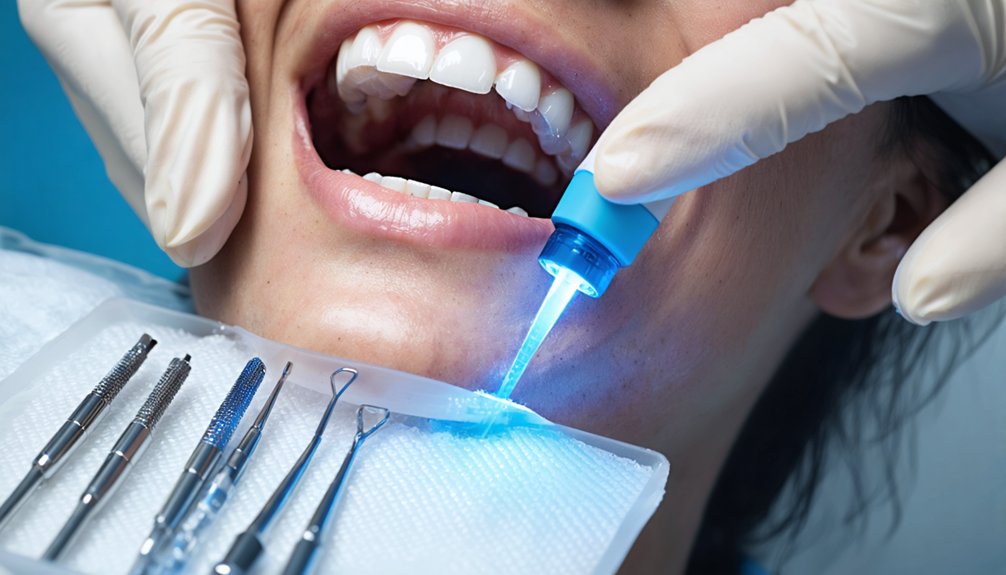
Understanding the financial pathways to laser whitening means little without knowing whether the procedure delivers results that justify your dollars. Laser treatments produce immediate color shifts (ΔE 3.3) comparable to at-home methods long-term, though they require 24% less peroxide and shorter sessions.
Laser whitening achieves comparable results to home treatments while using 24% less peroxide in significantly shorter sessions.
Aesthetic considerations favor laser for:
- Faster visible results: Immediate whitening versus gradual 14-day home treatments
- Stain-specific effectiveness: Superior performance on white spot lesions
- Maintained outcomes: Color changes sustained 6+ months regardless of activation method
Potential side effects include sensitivity in 30-78% of patients, typically resolving within two weeks. Lower peroxide concentrations with laser activation match higher-dose results while minimizing discomfort. Your choice hinges on whether immediate gratification outweighs cost savings from equally effective home protocols.
Timing Your Treatment for Maximum Value and Results
When you’re investing in laser whitening, timing transforms from a mere scheduling detail into a strategic element that shapes both your results and overall value. Schedule your 1-2 hour session approximately two weeks before important events—this buffer allows post-treatment sensitivity to resolve within 2-3 days while giving you control over your appearance timeline.
Your maintenance schedule directly impacts long-term value. Space treatments 6-12 months apart to protect enamel integrity while sustaining brightness. Deep staining from coffee or wine demands earlier intervention, potentially requiring multiple sessions you’ll want to plan for.
Post treatment care proves equally strategic. Following the 48-hour “white diet” protocol preserves your investment immediately, while your baseline shade and lifestyle habits determine whether you’ll need touch-ups annually or extend results beyond 18 months.
Frequently Asked Questions
Can I Combine Laser Whitening With Dental Work Like Veneers or Crowns?
Like a knight planning armor before battle, you’ll want laser whitening *before* veneers or crowns. Dental treatment compatibility requires whitening natural teeth first, then matching restorations. This sequence maximizes laser whitening benefits and guarantees seamless aesthetic results you control.
How Painful Is Laser Teeth Whitening During and After the Procedure?
You’ll experience minimal discomfort during laser whitening—just brief tingling or warmth. The recovery timeline’s quick: sensitivity typically resolves within 24-48 hours. You’re in control; desensitizing toothpaste and pain relievers manage any temporary discomfort effectively.
Are There Age Restrictions for Getting Laser Teeth Whitening Treatments?
Yes, you’ll need to meet minimum age requirements—typically 16-18 years old depending on your location. If you’re under 18, parental consent guidelines usually apply, ensuring your teeth are fully developed before you pursue whitening treatments.
What Foods Should I Avoid After Laser Whitening to Maintain Results?
You’ll want to avoid acidic foods and limit dark colored beverages for at least 48 hours post-treatment. Skip coffee, red wine, berries, and tomato-based sauces. This discipline protects your investment and maximizes your brilliant, lasting results.
Can Laser Whitening Damage Tooth Enamel or Existing Dental Work?
When performed correctly, laser whitening won’t damage enamel, though you’ll face potential for increased sensitivity. It won’t alter existing fillings, but they won’t whiten either—creating uneven results you’ll want addressed beforehand for ideal aesthetic control.